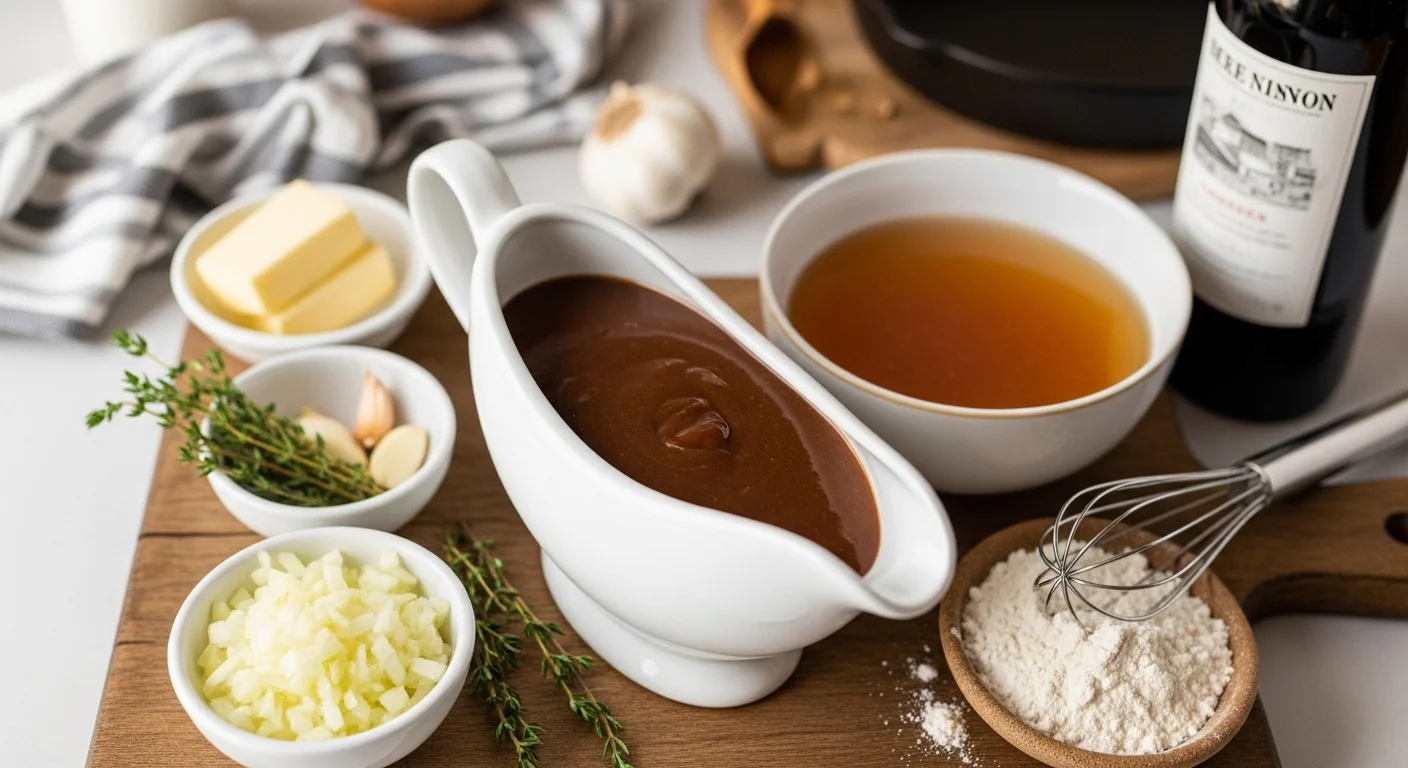
You know that one thing that takes a good meal and turns it into a great one?
Yeah. It’s gravy.
And not the kind from a packet. Real, from-scratch beef gravy that’s glossy, rich, and so deeply savory it makes mashed potatoes, roast beef, and even plain bread suddenly feel like a five-star meal.
Here’s the kicker though: most people think making gravy from scratch is complicated. It’s really, really not. Once you know what you’re doing, this whole thing comes together in under 20 minutes.
So keep reading, because I’m going to walk you through exactly how to make beef gravy that tastes like it came from a Sunday roast, any day of the week.
What You’ll Need
For the Gravy:
- 3 tablespoons unsalted butter
- 3 tablespoons all-purpose flour
- 2 cups beef broth (good quality, low-sodium preferred)
- 1 teaspoon Worcestershire sauce
- 1/2 teaspoon garlic powder
- 1/2 teaspoon onion powder
- Salt and black pepper to taste
- 1/4 teaspoon fresh thyme (optional, but adds a lot)
Optional Add-Ins for Extra Depth:
- 2 tablespoons beef drippings (from a roast or pan-seared steak)
- 1 tablespoon tomato paste
- 1/4 cup red wine (trust me on this one)
Tools You’ll Need
- Medium saucepan
- Wooden spoon or silicone whisk
- Measuring cups and spoons
- Ladle (for serving)
That’s it. No fancy equipment, no special gadgets.
Pro Tips
These are the things no one tells you about gravy until you’ve made it wrong a few times.
- Toast your flour. Once you add the flour to the butter, let it cook for a full 1-2 minutes before adding any liquid. This removes the raw flour taste. Skip this step and your gravy will taste like paste. Not great.
- Add broth slowly and whisk constantly. The most common mistake? Dumping all the broth in at once and ending up with lumpy gravy. Pour it in a slow, steady stream while whisking. Patience here pays off.
- Use beef drippings if you have them. If you’ve just roasted a beef joint or seared steaks, those brown bits and drippings at the bottom of the pan are liquid gold. Swap them in for the butter and you’ll get a completely different level of flavor.
- Low and slow at the end. Once the gravy thickens, drop the heat to low and let it simmer gently for 5 minutes. This mellows the flavors and gives you that smooth, velvety finish.
- Season at the very end. Beef broth has salt in it, and as the gravy reduces, it concentrates. Taste before adding salt or you’ll over-season without realizing it.
How to Make It: Step-by-Step Instructions
Step 1: Make the Roux
Melt 3 tablespoons of butter in a medium saucepan over medium heat.
Add 3 tablespoons of all-purpose flour and stir constantly with a wooden spoon.
Let it cook for 1-2 minutes. It’ll turn a light golden color and smell slightly nutty. That’s exactly what you want.
Step 2: Add the Broth
Now, with your whisk ready, slowly pour in the beef broth about 1/4 cup at a time.
Whisk constantly. No stopping. Keep going until all the broth is incorporated and the mixture is smooth.
Step 3: Season It
Add the Worcestershire sauce, garlic powder, onion powder, and thyme (if using).
If you’re adding red wine or tomato paste, now’s the time. Stir it in and let everything combine.
Step 4: Let It Thicken
Bring the gravy to a gentle simmer over medium heat, stirring occasionally.
It’ll thicken up within 3-5 minutes. You’re looking for a consistency that coats the back of a spoon.
If it gets too thick, add a splash more broth. Too thin? Let it simmer a little longer.
Step 5: Taste and Adjust
This is the most important step people rush through.
Taste the gravy. Add salt and black pepper as needed. A tiny splash more Worcestershire can go a long way here too.
Serve immediately.
Substitutions and Variations
No beef broth? Use chicken broth with a teaspoon of soy sauce for added depth. It won’t be exactly the same, but it works.
Gluten-free? Swap the all-purpose flour for cornstarch. Mix 2 tablespoons of cornstarch with 2 tablespoons of cold water to make a slurry, then whisk it into the simmering broth instead of making a roux.
Dairy-free? Replace the butter with olive oil or vegan butter. It changes the flavor slightly but still makes a solid gravy.
Want a mushroom gravy? Sauté 1 cup of sliced mushrooms in the butter before adding the flour. Mushrooms add an earthy richness that’s insanely good over steak.
Onion gravy version: Cook one finely diced onion in the butter until caramelized (about 10 minutes) before adding the flour. This is a classic British-style gravy and it is so, so good.
Make-Ahead Tips
Beef gravy is actually a great make-ahead recipe.
Make a big batch and store it in an airtight container in the fridge for up to 4 days. When reheating, add a splash of broth or water and warm it over low heat, stirring as it comes back together.
For longer storage, freeze it in small portions (an ice cube tray works great) for up to 3 months. Pull out however much you need and reheat from frozen.
Nutritional Breakdown (Per Serving, approx.)
| Nutrient | Amount |
|---|---|
| Calories | ~75 kcal |
| Fat | 5g |
| Carbohydrates | 5g |
| Protein | 2g |
| Sodium | ~320mg (varies by broth) |
Based on a 1/4 cup serving using low-sodium broth.
For lower-calorie gravy, reduce butter to 2 tablespoons and use an extra splash of broth to thin it out.
What to Serve It With
Beef gravy is one of those things that makes almost everything better. Here’s what it pairs especially well with:
- Mashed potatoes (obviously)
- Roast beef or pot roast
- Yorkshire pudding
- Poutine (fries + cheese curds + gravy)
- Open-faced roast beef sandwiches
- Rice (surprisingly amazing)
- Steamed vegetables for a lighter option
Leftovers and Storage
Fridge: Store in an airtight container for up to 4 days. Reheat on the stovetop with a splash of broth to loosen it up.
Freezer: Freeze for up to 3 months. Reheat gently over low heat, stirring frequently.
Avoid microwaving from cold if you can, as it tends to separate and turn lumpy. The stovetop method gives you a much better result.
Frequently Asked Questions
Why is my gravy lumpy? This almost always comes from adding broth too quickly. Next time, add it slowly, about 1/4 cup at a time, while whisking constantly. If it’s already lumpy, strain it through a fine mesh sieve.
How do I make it thicker? Let it simmer longer, or mix 1 tablespoon of cornstarch with 1 tablespoon of cold water and whisk that in while the gravy is simmering.
How do I make it thinner? Simply add more broth, a little at a time, until you hit the consistency you want.
Can I make gravy without drippings? Yes, and this whole recipe proves it. A good quality beef broth with Worcestershire sauce gives you excellent flavor without needing drippings at all.
Can I use this gravy for a roast dinner? Absolutely. It holds up beautifully with roast beef, roast chicken, or a full Sunday roast spread.
My gravy tastes too salty. How do I fix it? Add a splash more unsalted broth and a tiny squeeze of lemon juice to balance the saltiness. A small raw potato chunk simmered in the gravy for 10 minutes can also help absorb some salt.
Can I make this ahead of time for a dinner party? Yes! Make it up to 2 days ahead, refrigerate, and reheat gently on the stovetop. It tastes just as good, if not better, after sitting overnight.
Wrapping Up
This recipe is proof that the best things in life are actually simple.
No packets, no shortcuts, just real ingredients coming together in under 20 minutes to make something genuinely delicious.
If you try this beef gravy, I’d love to hear how it goes. Drop a comment below and let me know what you served it with or if you tried any of the variations. And if you have questions, ask away.