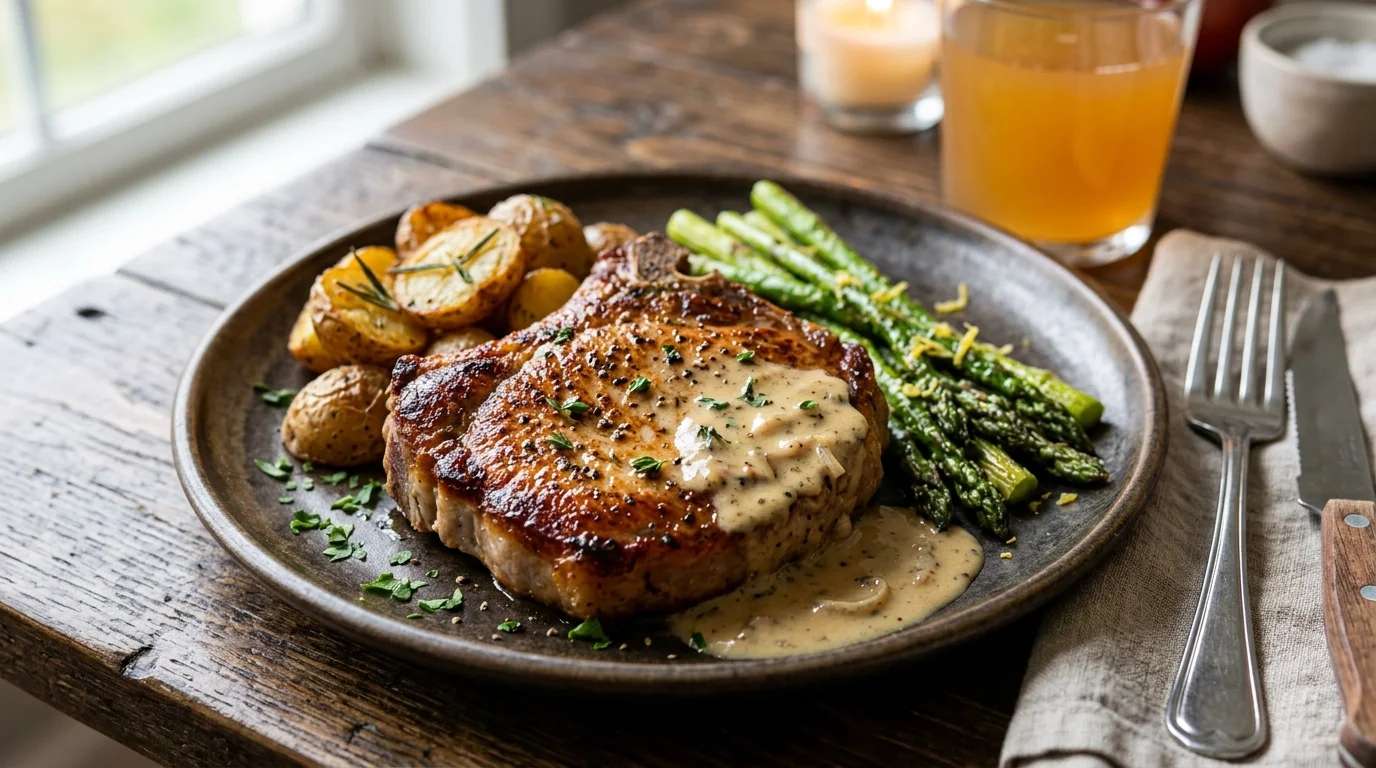
Let’s talk about the most underrated protein in your grocery store.
Pork chops.
I know, I know. You’ve had dry ones. Chewy ones. Ones that tasted like sad shoe leather.
That’s not pork’s fault. That’s a cooking technique problem, and I’m about to fix it for you.
This recipe gives you a pork chop with a golden, crispy crust on the outside and a center so juicy you’ll wonder why you ever gave up on this cut in the first place.
I’ve made these more times than I can count, and I’ve finally got the process down to something foolproof. No fancy equipment. No weird ingredients. Just a few tricks that make all the difference.
Let’s get into it. 🐷
What You’ll Need
For the pork chops:
- 4 bone-in pork chops (about 1-inch thick)
- 2 tablespoons olive oil
- 2 tablespoons unsalted butter
- 3 garlic cloves, smashed
- 2 sprigs fresh rosemary (or thyme)
- 1 teaspoon salt
- 1/2 teaspoon black pepper
- 1/2 teaspoon paprika
- 1/2 teaspoon garlic powder
- 1/2 teaspoon onion powder
For the brine (optional but highly recommended):
- 4 cups water
- 1/4 cup salt
- 2 tablespoons brown sugar
Tools You’ll Need
- Large mixing bowl (for brining)
- Cast iron skillet (this makes a real difference)
- Meat thermometer
- Tongs
- Aluminum foil
Pro Tips
Here’s what nobody tells you about pork chops until you’ve ruined a few.
- Buy bone-in chops. The bone helps insulate the meat, which means less moisture loss. Boneless chops cook faster and dry out faster too.
- Don’t skip the brine. Even 30 minutes in a simple saltwater brine changes everything. It seasons the meat all the way through and helps it hold onto moisture while it cooks.
- Pat them completely dry before searing. Any surface moisture means steam instead of a crust. A paper towel is your best friend here.
- Use a thermometer, not a timer. Pork is safe at 145°F. That’s it. Pull it right at that number and you’ll never deal with dry chops again.
- Let them rest. I know it’s tempting to cut in immediately. Don’t. Five minutes of resting lets the juices redistribute instead of running straight onto your cutting board.
How to Make Juicy Pork Chops
Step 1: Brine the chops (optional, but worth it)
Dissolve the salt and brown sugar in the water. Submerge the pork chops and let them sit in the fridge for 30 minutes to 2 hours.
Step 2: Dry and season
Remove the chops from the brine and pat them completely dry with paper towels.
Mix the salt, pepper, paprika, garlic powder, and onion powder in a small bowl. Rub the seasoning all over both sides of each chop.
Step 3: Sear
Heat the olive oil in a cast iron skillet over medium-high heat until it shimmers.
Add the pork chops and let them sear undisturbed for 3 to 4 minutes per side. You’re going for a deep golden-brown crust.
Step 4: Add butter and aromatics
Lower the heat to medium. Add the butter, smashed garlic cloves, and rosemary sprigs to the pan.
Once the butter melts, tilt the pan slightly and spoon the butter over the chops repeatedly for about 2 minutes. This is called basting, and it adds an unreal amount of flavor.
Step 5: Check the temperature
Insert a meat thermometer into the thickest part of a chop. You’re looking for 145°F.
If they’re not there yet, pop the whole skillet into a 400°F oven for a few more minutes until they hit temp.
Step 6: Rest and serve
Transfer the chops to a plate and tent loosely with foil. Let them rest for 5 minutes before serving.
Substitutions and Variations
- Boneless chops: Totally fine, just reduce your cook time slightly and watch the temperature closely since they cook faster.
- No cast iron: A heavy stainless steel skillet works too. Just avoid nonstick, since it won’t get you that same crust.
- Herb swap: Sage or thyme both work beautifully in place of rosemary.
- Spicier version: Add a pinch of cayenne to your seasoning mix.
- Dairy-free: Swap the butter for additional olive oil or ghee.
Make Ahead Tips
You can brine the chops up to 24 hours in advance. Just keep them covered in the fridge.
The seasoning mix can also be made ahead and stored in an airtight container for up to a month, so you’ve always got it ready to go.
Nutritional Breakdown (Per Serving)
| Nutrient | Amount |
|---|---|
| Calories | 380 |
| Protein | 32g |
| Fat | 26g |
| Carbs | 2g |
| Sodium | 620mg |
Note: this is an estimate and will vary based on the exact cut and brands used.
Leftovers and Storage
Store leftover pork chops in an airtight container in the fridge for up to 3 days.
To reheat without drying them out, warm them gently in a skillet over low heat with a splash of chicken broth, or microwave in short 20-second bursts covered with a damp paper towel.
You can also freeze cooked pork chops for up to 3 months. Thaw overnight in the fridge before reheating.
FAQ
Why are my pork chops always dry?
Almost always it’s overcooking. Pork chops go from juicy to dry shockingly fast once they pass 145°F. A thermometer solves this problem completely.
Do I really need to brine them?
You don’t have to, but it makes a noticeable difference in both flavor and moisture. Even a quick 30-minute brine helps.
What sides go well with pork chops?
Garlic mashed potatoes, roasted green beans, or a simple arugula salad all pair beautifully.
Can I grill these instead?
Absolutely. Follow the same brining and seasoning steps, then grill over medium-high heat for about 4 to 5 minutes per side, checking temperature the same way.
What’s the best thickness for pork chops?
I recommend 1-inch thick chops. Thinner chops cook too fast and are much easier to overcook by accident.
Wrapping Up
Pork chops get such an unfair reputation, and honestly, it’s just because most of us were never taught the right technique.
Now you know the secrets. Brine it, season it well, sear it hot, baste it in butter, and pull it the second it hits temperature.
Give this recipe a try this week and let me know how it turns out in the comments below. I’d love to hear what sides you paired it with, or if you tried any of the variations.