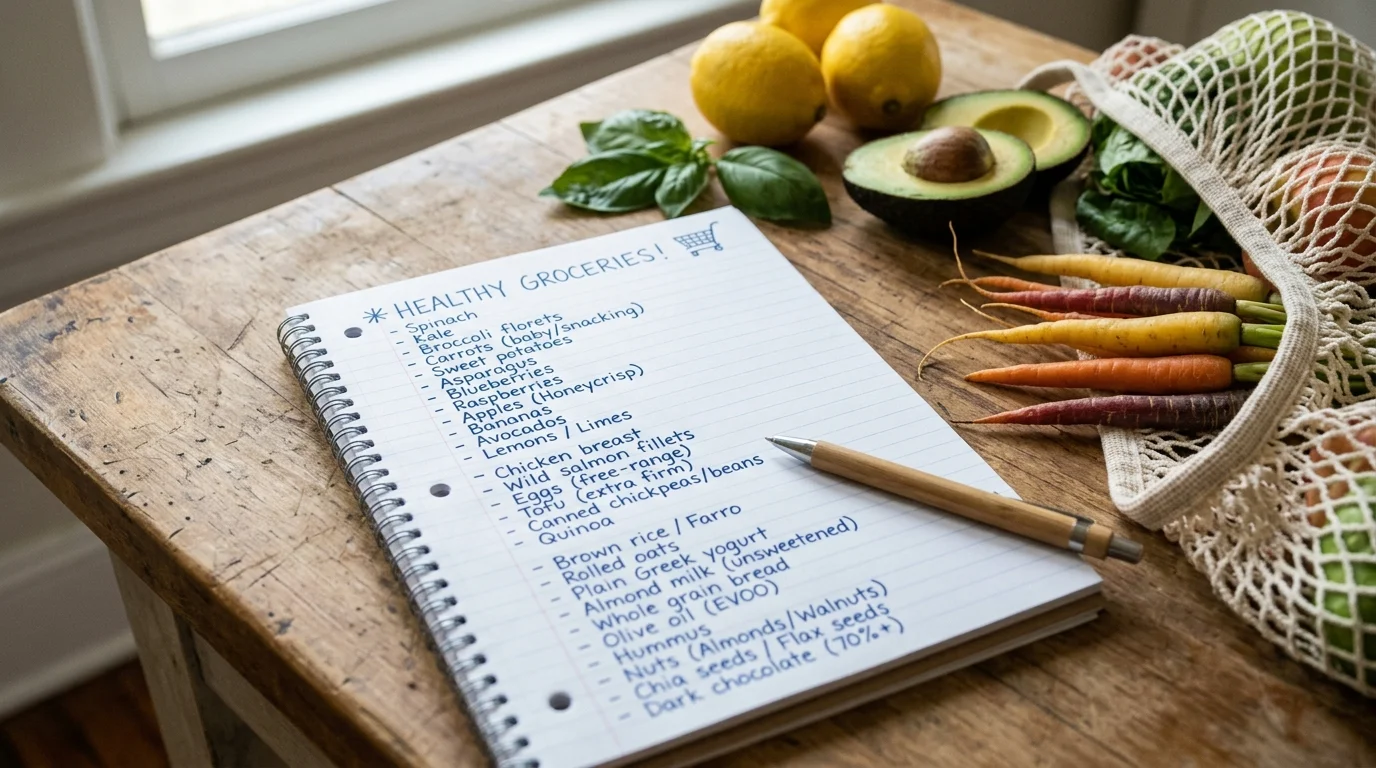
You walk into the grocery store with good intentions. You leave with chips, a random block of cheese, and zero idea what dinner is this week.
Sound familiar?
A solid grocery list fixes all of that. Not just a “buy more vegetables” reminder — a real, organized, strategic list that fills your fridge with food that works together.
This one is built around whole foods, real nutrition, and meals you’ll actually want to eat.
Why Most Grocery Lists Fail
Here’s the thing most people get wrong.
They shop by aisle. They grab random healthy-ish items. Then they stand in front of the fridge at 6pm wondering how to turn Greek yogurt, a zucchini, and two bell peppers into dinner.
A category-based list is the fix. When you shop by food type instead of aisle, your cart naturally builds complete meals without the mental gymnastics.
The List
🥩 Proteins
This is the anchor of every meal. Don’t skip it.
- Chicken breast or thighs (thighs are juicier and cheaper, just saying)
- Ground beef or ground turkey (85/15 fat ratio is the sweet spot)
- Salmon fillets (2-3 per week minimum)
- Eggs (a dozen at least — you’ll use them all)
- Canned tuna or sardines (high protein, zero effort)
- Greek yogurt, plain full-fat (also counts here)
- Cottage cheese
- Deli turkey or chicken (nitrate-free where possible)
Pro tip: Buy a rotisserie chicken. Use it in salads, wraps, soups, and grain bowls throughout the week. One purchase, four meals.
🥦 Vegetables
The goal: get at least five colors in your cart.
- Leafy greens — spinach, kale, or arugula (pre-washed bags save time)
- Broccoli or broccolini
- Zucchini
- Bell peppers (any color)
- Cherry tomatoes
- Cauliflower (roasts beautifully, makes a great rice substitute)
- Cucumbers
- Sweet potatoes
- Onions and garlic (always)
- Carrots
- Celery
Did you know a single cup of raw spinach has only 7 calories but delivers a solid dose of iron, folate, and vitamin K? 🌿 That’s not diet food. That’s just smart food.
🍓 Fruits
Keep it seasonal when possible. Frozen is always a solid backup.
- Blueberries (fresh or frozen)
- Bananas
- Apples
- Avocados (yes, they’re a fruit, yes they deserve their own line item)
- Lemons and limes (you’ll use these for everything)
- Berries of any kind
- Oranges or grapefruit
🌾 Whole Grains & Complex Carbs
Not all carbs are the enemy. These ones fuel you without the crash.
- Oats (rolled, not instant — the instant kind is usually loaded with sugar)
- Brown rice or wild rice
- Quinoa (technically a seed, nutritionally a powerhouse)
- Whole grain bread or sourdough
- Lentils
- Chickpeas (canned or dry)
- Black beans
Quinoa has all nine essential amino acids. That means it’s technically a complete protein. Most plant foods can’t say that. 🤯
🧀 Dairy & Dairy Alternatives
- Plain Greek yogurt (versatile enough for breakfast and savory dips)
- Feta cheese or parmesan (a little goes a long way)
- Whole milk or your choice of alt milk (oat, almond, coconut)
- Butter (real butter, not margarine — we’re not doing that)
- Kefir (optional but great for gut health)
🫒 Healthy Fats
Your brain is roughly 60% fat. Feed it well.
- Extra virgin olive oil
- Avocado oil (higher smoke point, great for cooking)
- Raw nuts — almonds, walnuts, cashews
- Natural peanut butter or almond butter (ingredients: nuts, salt — that’s it)
- Chia seeds
- Flaxseeds
- Tahini
🥫 Pantry Staples
These are the things that make every meal come together faster.
- Canned diced tomatoes
- Coconut milk
- Low-sodium chicken or vegetable broth
- Dijon mustard
- Apple cider vinegar
- Soy sauce or tamari
- Hot sauce (non-negotiable 🔥)
- Honey or pure maple syrup
- Canned beans (black, kidney, chickpeas)
- Tomato paste
🌿 Herbs, Spices & Flavor
Healthy food has a reputation for being bland. That reputation comes from people who skip this section.
- Cumin, smoked paprika, turmeric, garlic powder, onion powder
- Italian seasoning or dried oregano
- Chili flakes
- Black pepper and sea salt
- Fresh herbs — cilantro, parsley, basil (if your store has them)
- Nutritional yeast (adds a cheesy, nutty flavor to everything)
🧃 Drinks
Most grocery lists completely ignore this section. Don’t.
- Sparkling water (plain or lightly flavored)
- Green tea or matcha powder
- Black coffee (if that’s your thing)
- Coconut water (great post-workout)
Skip the juice. Even 100% orange juice has as much sugar as a can of soda — just without the carbonation to make it obvious.
How to Actually Use This List
Buying these ingredients is step one. Using them is step two. Here’s a simple approach:
- Pick 2-3 proteins for the week and build around them
- Batch cook grains on Sunday — a big pot of quinoa or rice takes 20 minutes and lasts 5 days
- Wash and chop vegetables as soon as you get home (you’ll actually eat them)
- Keep one “emergency” meal in the pantry for the days nothing goes according to plan
A Few Things Worth Knowing
Fresh vs. frozen vegetables: Frozen vegetables are often more nutritious than fresh. They’re flash-frozen at peak ripeness, which locks in nutrients. Fresh produce can lose up to 50% of its nutrients within a few days of harvest.
Organic isn’t always necessary: The Environmental Working Group publishes a “Dirty Dozen” list each year of the produce most contaminated with pesticides. Prioritize organic for those items (strawberries, spinach, peppers) and go conventional for everything else.
Reading labels: Anything with more than five ingredients is worth a closer look. Not automatically bad — just worth knowing what you’re buying.
Budget Tips
Eating healthy doesn’t mean spending more. It means spending smarter.
- Frozen fish and chicken are often just as good as fresh and cost significantly less
- Dry beans and lentils are cheaper than canned and even more nutritious
- Generic store brands for pantry staples are almost always identical to name brands
- Buy produce that’s in season — it costs less and tastes better
- Eggs are still one of the cheapest high-protein foods available anywhere
FAQ
How often should I grocery shop? Once a week for most people. If you’re buying a lot of fresh fish or leafy greens, a mid-week top-up run might help.
Can I freeze things from this list? Yes — proteins, cooked grains, and even some vegetables (like spinach and broccoli) freeze well. Avocados can be frozen once mashed.
What if I have dietary restrictions? This list is naturally gluten-light and dairy-optional. Swap Greek yogurt for a dairy-free version, swap grains for more legumes, and you’ve adapted it without losing any nutrition.
How do I stop produce from going bad? Store greens with a paper towel in the bag to absorb moisture. Keep ethylene-sensitive produce (like berries) away from ethylene-producing foods (like apples and bananas). Don’t wash berries until you’re ready to eat them.
Is this list keto-friendly? Mostly yes. Focus on the proteins, healthy fats, low-carb vegetables, and nuts. Dial back the grains, beans, and fruit if you’re tracking net carbs closely.
Wrapping Up
A grocery list is only as powerful as the intention behind it.
This one isn’t about perfection. It’s about having the right building blocks in your kitchen so that eating well becomes the easy choice instead of the hard one.
Take what works for you, adjust for your household, and make it yours. Then come back and tell me — what’s the one ingredient you always forget to buy and then regret it all week?
Drop it in the comments. I read every single one.