Nobody warned me how confusing pregnancy eating would be.
You’re suddenly supposed to care deeply about folic acid levels, avoid half your favorite foods, and figure out what on earth “eat for two” even means. (Spoiler: it doesn’t mean double portions. 😅)
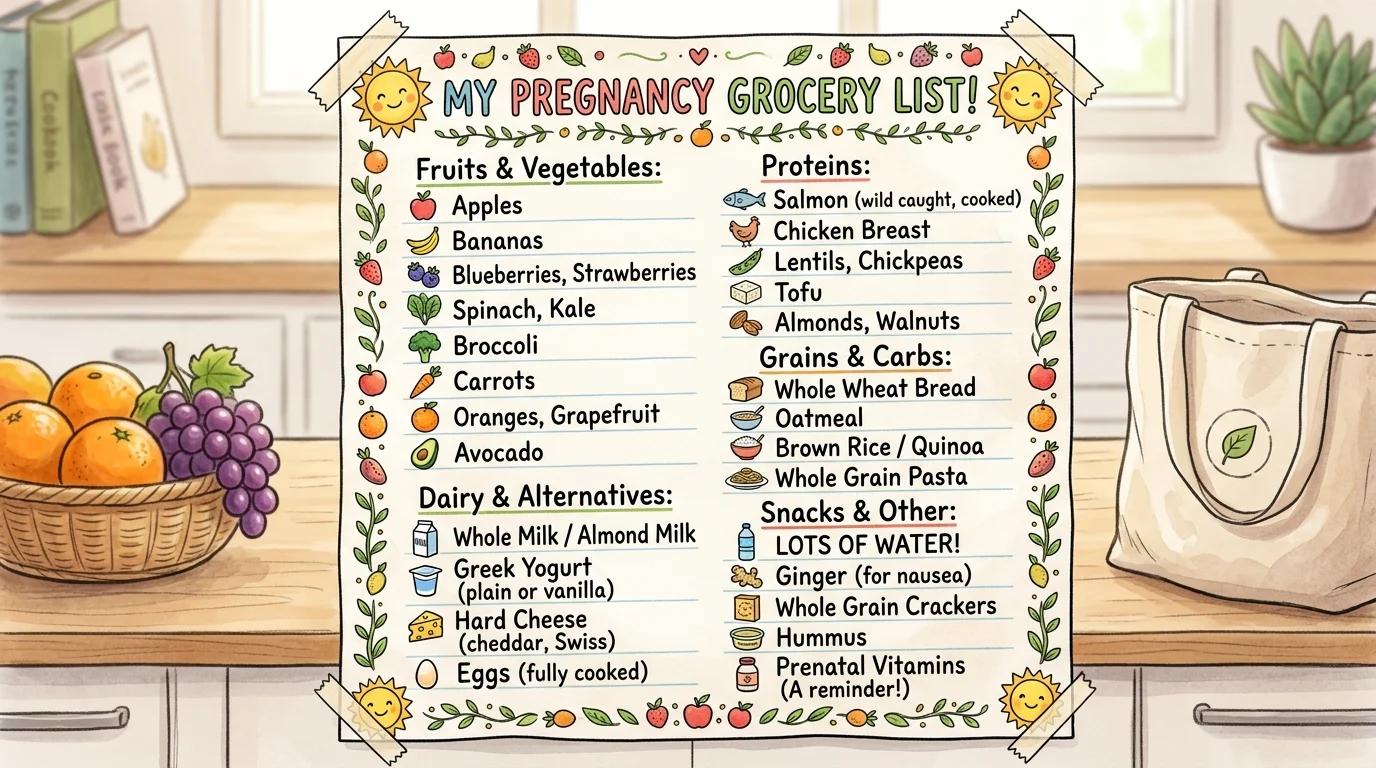
So I put together the grocery list I wish I had. One that’s organized, trimester-specific, and actually explains why you’re buying what you’re buying.
Because “just eat healthy” isn’t a grocery list. This is.
What You’ll Need
Fruits & Vegetables
- Spinach (fresh or frozen)
- Kale
- Avocados
- Sweet potatoes
- Broccoli
- Bananas
- Oranges
- Blueberries
- Strawberries
- Mangoes
- Edamame (frozen is fine)
- Peas
🥩 Proteins
- Salmon (wild-caught)
- Sardines (canned in water or olive oil)
- Chicken breast
- Lean ground beef
- Eggs
- Lentils (dried or canned)
- Chickpeas (canned)
- Black beans (canned)
- Greek yogurt (plain, full-fat)
- Cottage cheese
- Tofu (firm)
🌾 Grains & Carbs
- Oats (rolled)
- Quinoa
- Brown rice
- Whole wheat bread
- Whole wheat pasta
- Fortified breakfast cereal (check the label for folic acid)
🧀 Dairy & Alternatives
- Whole milk (or fortified plant milk)
- Pasteurized hard cheese (cheddar, parmesan)
- Pasteurized mozzarella
- Butter
🫙 Pantry Staples
- Prenatal-safe prenatal vitamin (confirm with your OB)
- Chia seeds
- Ground flaxseed
- Walnuts
- Almonds
- Pumpkin seeds
- Olive oil
- Coconut oil
- Low-sodium soy sauce or tamari
- Canned tomatoes
- Vegetable or chicken broth (low sodium)
🧂 Spices & Extras
- Ginger (fresh or ground) — great for nausea
- Turmeric
- Garlic
- Lemon
- Apple cider vinegar
❌ Foods to Avoid (Skip These Aisles)
| Avoid | Why |
|---|---|
| Raw/undercooked meat or fish | Risk of listeria, toxoplasma |
| High-mercury fish (shark, swordfish, king mackerel, tilefish) | Harmful to baby’s nervous system |
| Unpasteurized cheeses (brie, feta, blue cheese unless labeled pasteurized) | Listeria risk |
| Deli meats (unless heated until steaming) | Listeria risk |
| Raw sprouts | Bacteria risk |
| Alcohol | No safe amount during pregnancy |
| Excess caffeine | Limit to under 200mg/day |
Pro Tips
1. Buy frozen produce and don’t feel guilty about it. Frozen spinach, peas, and edamame are just as nutritious as fresh, often cheaper, and they won’t go bad before you use them. When pregnancy fatigue is real, convenience matters.
2. Pair iron-rich foods with vitamin C. Your body absorbs iron from plant-based sources (like spinach and lentils) much better when you eat it with vitamin C at the same meal. Squeeze lemon over your lentil soup. Add strawberries to your spinach salad. Easy.
3. Don’t fight your first trimester nausea with “healthy” foods. If bland crackers and ginger ale are the only things that sound good at 8 weeks, that is okay. Stock ginger candies, plain crackers, and cold fruits like watermelon. You’ll get back to balanced eating. This season passes.
4. Read your prenatal vitamin label. Not all prenatal vitamins are created equal. Look for methylfolate (not just folic acid), DHA, iron, and vitamin D3. If you’re vegan, also check for B12. Your OB can help you pick the right one.
5. Batch cook on weekends. Energy levels in the first and third trimester especially can tank fast. Cook a big pot of lentils, brown rice, or soup on Sunday and you’ll thank yourself all week. Future tired-you deserves that.
Tools You’ll Need
- Large stockpot (for soups and grains)
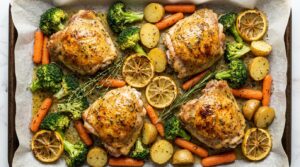
- Sheet pan (for roasting vegetables)
- Blender or immersion blender (smoothies, soups)
- Mixing bowls (various sizes)
- Measuring cups and spoons
- Sharp chef’s knife
- Cutting board
- Can opener
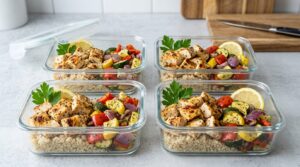
- Glass food storage containers (meal prep made easy)
- Kitchen scale (optional but helpful for portioning)
Substitutions and Variations
Dairy-free? Swap cow’s milk for fortified oat milk, almond milk, or soy milk. Check that it’s calcium and vitamin D fortified. Use coconut yogurt in place of Greek yogurt.
Vegetarian or vegan? Focus on lentils, chickpeas, black beans, tofu, edamame, and quinoa for protein. Add a B12 supplement and check that your prenatal vitamin covers iron and DHA (algae-based DHA is the plant-based option).
Can’t stomach fish? Algae-based omega-3 supplements are your friend. They give you the same DHA as fish oil without the fishy taste or the food aversions.
Gluten sensitivity? Swap wheat bread and pasta for certified gluten-free oats, brown rice, quinoa, and gluten-free pasta. Everything else on this list is naturally gluten-free.
Trimester-by-Trimester Breakdown
First Trimester: Focus on Folate & Fighting Nausea
This is the critical window for neural tube development, so folate is your #1 priority.
Key nutrients: Folate, vitamin B6, iron, vitamin C
Stock up on:
- Leafy greens (spinach, kale)
- Fortified cereals (huge source of folic acid)
- Lentils and chickpeas
- Avocados
- Ginger (for nausea relief — genuinely works for a lot of people)
- Bananas (easy on the stomach, high in B6)
- Plain crackers and saltines (when nothing else sounds good)
Note: The neural tube closes by week 6, often before many people even know they’re pregnant. This is why doctors recommend taking a prenatal vitamin before conception.
Second Trimester: Building Bones, Boosting Blood
Most people feel a lot better during the second trimester. And your baby is growing fast, so your nutrient needs go up.
Key nutrients: Calcium, vitamin D, iron, protein, omega-3s
Stock up on:
- Salmon (2-3 servings per week is considered safe and is a top source of DHA)
- Dairy products or fortified alternatives
- Lean meats and eggs
- Broccoli and sweet potatoes
- Whole grains (quinoa, brown rice, oats)
- Nuts and seeds
Fun fact: Your blood volume increases by up to 50% during pregnancy. That’s why iron becomes so critical. Low iron = extreme fatigue, and pregnancy fatigue is already very real.
Third Trimester: Prep for Labor & Baby’s Final Growth
Baby’s brain is developing rapidly, and you’re also preparing your body for labor and recovery.
Key nutrients: DHA/omega-3s, vitamin K, magnesium, fiber (hello, constipation), protein
Stock up on:
- Fatty fish or algae-based DHA supplement
- Dates (small but growing research suggests eating 6 dates/day in the last 4 weeks may support cervical ripening — talk to your midwife or OB)
- High-fiber foods (oats, lentils, chia seeds, prunes)
- Magnesium-rich foods (pumpkin seeds, spinach, black beans)
- Protein at every meal (your baby gains most of their weight in this trimester)
Make-Ahead Tips
Freezer meals are genuinely worth making at around 30-34 weeks.
These travel really well to the freezer:
- Lentil soup
- Black bean chili
- Chicken and vegetable stew
- Oatmeal baked cups (pre-portioned and reheatable)
- Pasta sauces
Your postpartum self will be overwhelmed and sleep-deprived. Having 10-15 freezer meals ready is not extra — it’s necessary.
Nutritional Snapshot (Per Day Goals During Pregnancy)
| Nutrient | Daily Goal (Pregnant) | Top Food Sources |
|---|---|---|
| Folate/Folic Acid | 600 mcg | Spinach, lentils, fortified cereal |
| Iron | 27 mg | Red meat, lentils, spinach + vitamin C |
| Calcium | 1,000 mg | Dairy, fortified plant milk, broccoli |
| Vitamin D | 600 IU | Fatty fish, fortified milk, sunlight |
| DHA (Omega-3) | 200–300 mg | Salmon, sardines, algae supplement |
| Protein | 70–100g | Meat, eggs, Greek yogurt, legumes |
| Fiber | 25–30g | Oats, lentils, chia seeds, fruit |
Always check with your OB or midwife for personalized targets. These are general guidelines.
Leftovers and Storage
Cooked grains (rice, quinoa): Fridge up to 5 days, freezer up to 3 months.
Cooked lentils and beans: Fridge up to 5 days. Freeze in portions.
Cooked chicken or beef: Fridge up to 4 days, freezer up to 3 months.
Cooked salmon: Fridge up to 2 days only — eat it fresh when possible.
Smoothie packs: Pre-bag your frozen spinach, banana, and berries together in freezer bags. Grab one each morning, throw it in the blender with milk. Done.
Tip: Label everything in your freezer with the date and what it is. Pregnancy brain is absolutely real and three months later you will have no idea what’s in that unlabeled container.
FAQ
Can I eat deli meat if I’m pregnant? You can eat it if it’s been heated until steaming hot first. Cold deli meat carries a small but real risk of listeria, which can be serious during pregnancy. When in doubt, skip it or heat it.
How much fish can I eat per week? The FDA recommends 2-3 servings (8-12 ounces total) per week of low-mercury fish like salmon, shrimp, tilapia, and canned light tuna. Avoid high-mercury fish completely.
Is it safe to eat eggs during pregnancy? Yes — as long as they’re fully cooked. Scrambled, hard-boiled, and fully cooked fried eggs are all fine. Skip runny yolks and raw egg preparations.
Do I actually need to eat more calories during pregnancy? Only in the second and third trimesters. The general guidance is about 340 extra calories per day in the second trimester and 450 extra in the third. In the first trimester, your calorie needs don’t increase much.
Can I drink coffee? Yes, in moderation. Most OBs and the American College of Obstetricians and Gynecologists (ACOG) recommend staying under 200mg of caffeine per day. A standard 8oz drip coffee has about 95mg.
What if I have food aversions and can’t eat these foods? This is so common. Work with what you can tolerate. A prenatal vitamin fills a lot of gaps, and most healthy babies are born to mothers who survived on crackers and fruit during the first trimester. Just do your best.
Is organic produce necessary? Organic is ideal for the “Dirty Dozen” (the produce with highest pesticide residue like strawberries, spinach, and apples), but it’s not required. Wash everything thoroughly. Eating conventional produce is still far better than not eating enough fruits and vegetables.
Wrapping Up
Pregnancy nutrition doesn’t have to feel like a science project.
Start with this list, check in with your OB or midwife, and take it one trimester at a time. The goal isn’t perfection — it’s nourishing yourself and your baby as best you can, given the exhaustion, the food aversions, and the reality of real life.
Once you’ve tried some of these staples or found what works for your pregnancy, come drop a comment below. What foods saved you? What did you absolutely not want to eat? I’d genuinely love to hear it.