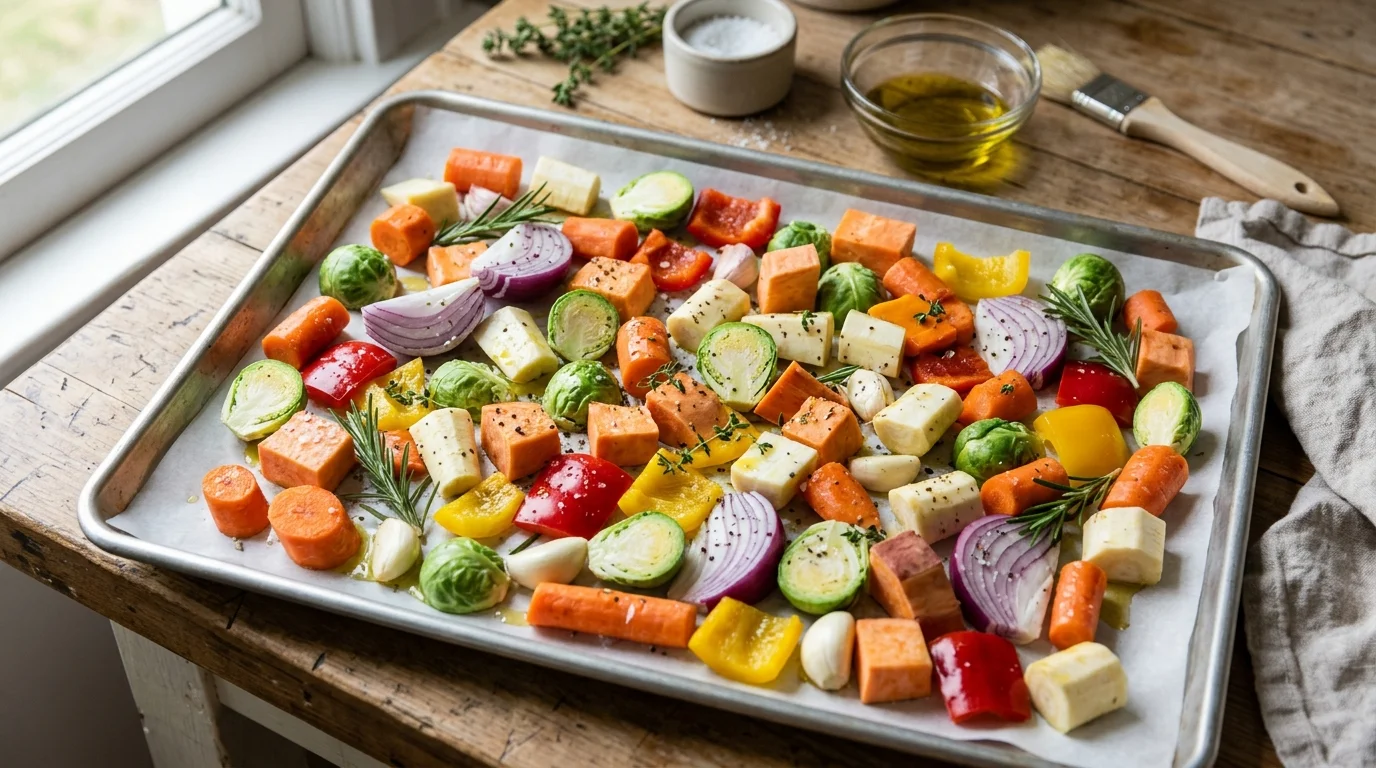
You know that moment when you pull something out of the oven and the whole kitchen smells unreal?
That’s this recipe.
Roasted mixed vegetables sound simple. And they are. But there’s a reason some come out soggy and sad while others get those perfect caramelized edges that make you want to eat them straight off the pan.
The difference is mostly technique. And I’m going to walk you through every bit of it.
This is 100% vegan, endlessly customizable, and genuinely one of those recipes you’ll come back to again and again without getting bored.
What You’ll Need
Vegetables:
- 1 medium zucchini, cut into ½-inch half-moons
- 2 bell peppers (any color mix), cut into 1-inch chunks
- 1 large red onion, cut into wedges
- 1 cup cherry tomatoes, whole
- 1 medium yellow squash, cut into ½-inch half-moons
- 1 cup broccoli florets
For the Seasoning:
- 3 tablespoons olive oil
- 1 teaspoon garlic powder
- 1 teaspoon smoked paprika
- ½ teaspoon cumin
- 1 teaspoon dried Italian herbs (or dried thyme + oregano)
- Salt and black pepper to taste
- Optional: pinch of red pepper flakes for heat
To Finish:
- Fresh lemon juice (half a lemon)
- Fresh parsley or basil, roughly chopped
Tools You’ll Need
- Large sheet pan (or two, for best results)
- Large mixing bowl
- Sharp knife and cutting board
- Parchment paper or silicone baking mat
- Measuring spoons
- Tongs or spatula
Pro Tips
These are the things that actually make a difference.
- Don’t crowd the pan. This is the number one reason vegetables steam instead of roast. They need space around them so hot air can circulate. Use two sheet pans if you have to.
- Pat your vegetables dry. Especially zucchini and squash. They hold a lot of water. Press them with a paper towel before tossing in the oil, and you’ll get way better browning.
- Cut everything roughly the same size. Not identical, but close. Tiny pieces will burn before the bigger ones are done.
- Crank the heat. High heat (400-425°F / 200-220°C) is what gets you those beautiful caramelized edges. Low and slow is for braises, not roasted veg.
- Don’t skip the lemon at the end. A squeeze right out of the oven brightens everything. It’s a small step that makes a big difference.
Substitutions and Variations
No zucchini? No problem. This recipe is basically a template.
Vegetable swaps:
- Eggplant, asparagus, fennel, mushrooms, or green beans all work beautifully
- Root vegetables like carrots or sweet potato work too — just add them first as they take longer
Oil alternatives:
- Avocado oil holds up even better at high heat if you have it
Flavor variations:
- Mediterranean: Add kalamata olives and capers at the end
- Balsamic glaze: Drizzle over right before serving
- Spicy: Double the red pepper flakes and add a dash of cayenne
- Herb-forward: Toss in fresh rosemary sprigs before roasting
Make Ahead Tips
Prep the vegetables and the seasoning mix the night before. Store them separately in the fridge, then toss and roast when you’re ready.
The tossed, raw vegetables can sit in the bowl (covered) for up to 2 hours before roasting without any issue.
Nutritional Notes
Per serving (recipe makes 4):
- Calories: ~150
- Carbs: ~14g
- Fat: ~10g (mostly healthy unsaturated fats from olive oil)
- Fiber: ~4g
- Protein: ~3g
Naturally gluten-free, dairy-free, and whole-food plant-based. If you’re eating low-fat, reduce olive oil to 1.5 tablespoons and use a misting bottle to distribute it evenly.
Meal pairing ideas:
- Serve over cooked quinoa or brown rice for a complete meal
- Stuff into a warm pita with hummus for a killer vegan wrap
- Toss with pasta and a drizzle of tahini dressing
- Serve alongside grilled tofu or chickpeas for protein
How to Make Roasted Mixed Vegetables
Step 1: Preheat and Prep
Preheat your oven to 425°F (220°C). Line your sheet pan(s) with parchment paper.
Wash and dry all your vegetables thoroughly. Dry them well — extra moisture is the enemy of crispy edges.
Step 2: Cut Your Vegetables
Cut everything into similarly-sized pieces. Aim for roughly 1-inch chunks across the board.
Keep the cherry tomatoes whole. They’ll burst and get jammy in the oven, which is exactly what you want.
Step 3: Season
Add all the vegetables to a large mixing bowl.
Drizzle with olive oil, then sprinkle over the garlic powder, smoked paprika, cumin, dried herbs, salt, and pepper (and red pepper flakes if using).
Toss well until everything is evenly coated. Take an extra 30 seconds here — unevenly seasoned vegetables are a real disappointment.
Step 4: Spread on the Pan
Spread the vegetables in a single layer across your sheet pan(s).
Critical: leave space between pieces. If they’re touching, they’ll steam. You want them to have breathing room.
Step 5: Roast
Roast at 425°F for 20-25 minutes, flipping once halfway through at the 12-minute mark.
You’re looking for golden-brown edges and tender centers. The cherry tomatoes will be soft and slightly blistered. That’s the goal.
Step 6: Finish and Serve
Remove from the oven. Squeeze half a lemon over everything while it’s still hot.
Top with fresh parsley or basil and serve immediately.
Leftovers and Storage
Roasted vegetables keep really well. Here’s how:
- Fridge: Store in an airtight container for up to 4 days
- Reheating: Spread back on a sheet pan and reheat at 375°F for 8-10 minutes. Do not microwave if you want to preserve the texture — you’ll just get mushy veg.
- Freezer: Not recommended for these vegetables. The water content makes them mushy after freezing.
Leftover ideas:
- Blend with broth for a quick roasted vegetable soup
- Add to scrambled eggs or a tofu scramble
- Toss into a grain bowl with tahini
FAQ
Can I use frozen vegetables? Technically yes, but the results won’t be as good. Frozen veg has more water content, which leads to steaming rather than roasting. If that’s all you have, pat them very dry and add 5 minutes to the cooking time.
Why are my roasted vegetables soggy? Two reasons: the pan was crowded, or the vegetables had too much moisture before roasting. Give them more space and dry them well before tossing.
Can I make this oil-free? You can. Use a splash of vegetable broth or aquafaba (the liquid from a can of chickpeas) instead. The browning won’t be the same, but they’ll still taste great.
Do I need to peel the zucchini or squash? Nope. The skin is edible and holds everything together during roasting.
Can I add potatoes? Yes, but roast them on a separate pan or add them 10-15 minutes before the other vegetables, since they take longer to cook through.
What’s the best pan for roasting vegetables? A heavy rimmed sheet pan. Dark pans absorb more heat and promote better browning. Avoid glass or ceramic, which trap steam.
Wrapping Up
This recipe proves that simple doesn’t mean boring. A hot oven, good olive oil, the right spices, and a little patience with the pan space — that’s genuinely all it takes.
Once you nail the basic method, you’ll start reaching for it constantly. Weeknight dinner with whatever’s in the fridge. Meal prep for the week. A side that outshines the main dish.
Give it a try and come back to tell me how it went. Did you stick to the recipe or throw in your own twist? Drop your questions or results in the comments below — I read every single one.